Ancient writers often used literary structure to implicitly communicate important truths. When we inform ourselves about some of these literary techniques, our reading of the Bible can become much richer. In Luke 18 and 19, there are three stories told back-to-back: the story of the rich young ruler, the story of blind Bartimaeus, and the story of Zacchaeus.
If we arrange them visually, they look like this:
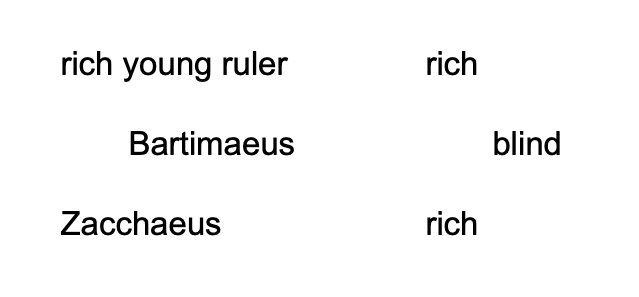
The outer layers of the “sandwich” are comprised of rich men, while the meaty centre is a blind men. In such a sandwich structure, the central layer is always the most important, and is meant to influence how we see the surrounding layers. If Bartimaeus is at the centre, then there must be an aspect of blindness about Zacchaeus and the rich young ruler as well. In other words, the story of Bartimaeus is sandwiched by two rich men, "blinded by their riches.” [2]
The Rich Young Ruler
Read it yourself: Luke 18:18-27
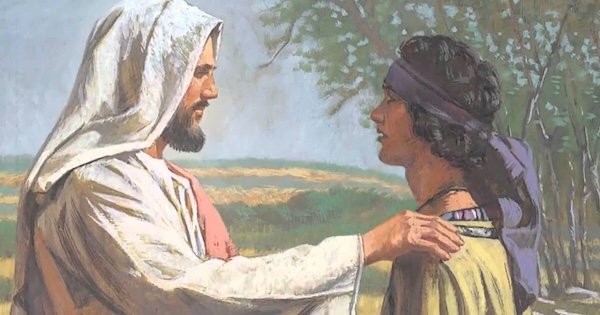
When the rich young ruler asked what he must do to receive eternal life, Jesus rattled off a list of commandments. The ruler declared he had followed them all. Jews of Jesus’ day tended to think that prosperity was a sign of God’s favour, so the young man likely interpreted his wealth as a confirmation of his righteousness.
Jesus didn’t let him off the hook. He told the man to donate his belongings to the poor. This request points to the greatest commandment:
‘Love the Lord your God with all your heart and with all your soul and with all your strength and with all your mind”; and, “Love your neighbour as yourself.”’
(Luke 10:27)
Notice that Luke didn't separate this commandment into a first and second part as Matthew did. Luke, was much more interested in how to apply Jesus’ teachings throughout his gospel, so from his point of view this was one holistic command, just as it was for John, who later wrote, “Whoever does not love their brother and sister, whom they have seen, cannot love God, whom they have not seen.” [3] Love holistically embraces both God and other human beings.
However, the rich young ruler remained convinced of his own virtue. He was unable to walk away from his wealth and remained blind to his own shortcomings. This highlights the danger of the prosperity gospel: those convinced of their own righteousness because of their prosperity are less likely to recognise their sin. “It is easier for a camel to go through the eye of a needle than for a rich man to enter the kingdom of God,” Jesus observed sadly. [4]
Bartimaeus
Read it yourself: Luke 18:35–42
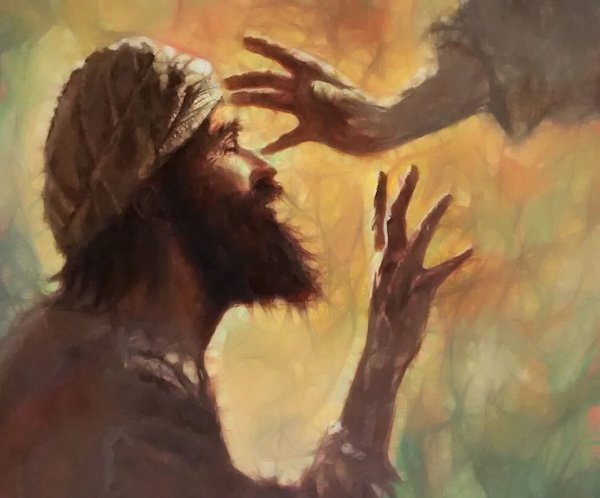
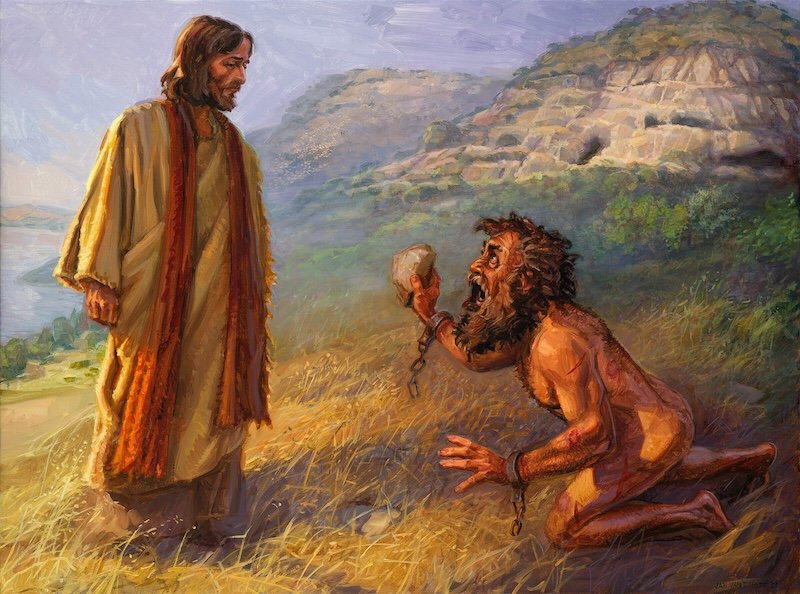
Later, as Jesus approached Jericho, the crowds of the city came out to greet Him. There was such a hubbub that it even caught the attention of a blind man, Bartimaeus, who called out to Jesus. Bartimaeus was an unpopular fellow. In ancient times, infirmity was seen as having both a physical and moral source, so those who were ill or disabled were often ejected from religious and social circles. The crowd harshly told Bartimaeus to shut up, but he ignored them.
Jesus didn’t let the crowd off the hook. He asked them to bring Bartimaeus to Him. Instead of allowing the crowd to block a blind man from entering His presence, He transformed the crowd into courtiers ushering Bartimaeus to Him.
When Bartimaeus came, Jesus said, “What do you want Me to do for you?” [6] This wasn’t a trivial question. With the cultural requirement for righteous people to give alms, blind men were able to make a living in those days. Blind, Bartimaeus was financially stable; seeing, he would struggle without marketable skills. Jesus made no assumptions, but sought Bartimaeus’ consent. He respected Bartimaeus’ dignity, treating him as a legitimate participant in his own healing. When given the choice between wholeness, or remaining financially secure and blind, Bartimaeus chose the former and followed Jesus.
Zacchaeus
Read it yourself: Luke 19:1-10

In ancient times, tax collectors were exploitative and corrupt. Although the Roman government set a base tax rate, only tax collectors knew what the required taxes actually were. Tax collectors could charge whatever they liked and pocket the difference. They were so despised that not only were their households considered unclean, but lying to them was socially acceptable in Jesus’ day.
Zacchaeus, a tax collector, painfully wanted to see Jesus but not be seen. So he climbed a sycamore tree, which had big leaves and was easy to hide in.
The crowd’s enthusiastic welcome as Jesus approached Jericho during Bartimaeus’ story gives us a hint of the social dynamic in Zacchaeus’ story. In the Middle East, it’s customary for a famous figure to receive an exuberant welcome as he approaches a city, and then to be escorted to the most prestigious place, where he will be received with a large, hospitable banquet. However, Jesus bypassed the townspeople’s hospitality in favour of Zacchaeus’. In doing so, “Jesus shift[ed] the crowd’s hostility against Zacchaeus to himself.” [7]
In Mediterranean culture, eating together is a powerful statement of social acceptance. Zacchaeus responded to Jesus’ grace and acceptance with joyful repentance. “Behold, Lord,” he said, “half of my possessions I will give to the poor, and if I have defrauded anyone of anything, I will give back four times as much.” [8]
Let’s look at some of the laws and customs of that time:
- Old Testament Law: a thief had to pay back what he’d stolen, plus 20% [9]
- Tradition of the Rabbis: tax collectors had to pay back twice what they’d stolen [10]
However, Zacchaeus demonstrated his sincerity by declaring he would pay back four times as much.
In transforming the heart of the oppressor through compassion, Jesus not only acts on behalf of Zacchaeus but also on behalf of the community he oppressed. [11]
Zacchaeus’ story accentuates the principle that a one-size-fits-all expression of Jesus' good news may be detrimental to those whose hearts have already been prepared to accept it. I wonder: how might Zacchaeus’ story have ended if Jesus had first pointed out his sin? Would he still have experienced the acceptance that opened his heart? In Zacchaeus’ case, there was no need to point out his sin. His own conscience had done this already.
How important it is for us to stay connected with the Holy Spirit while we’re sharing the good news of Jesus with the people around us. Only He knows what they need to hear, and what they’ve already understood. Only He knows when something should be inserted or left out. Only He knows the timing of when to speak and when to be silent. If we get these things wrong, we can do a lot of damage. But if we depend on the Holy Spirit’s leading, the results can be glorious, just as they were for Zaccheus.
NOTES
All scriptures taken from the NIV unless otherwise noted.
Unless otherwise noted, cultural information was taken from Bailey, Kenneth. 2009. Jesus Through Middle Eastern Eyes: Cultural Studies in the Gospels (IVP Academic) <https://www.perlego.com/book/1034085> [accessed 20 February 2026]
[1] The technical term for this sandwich structure is: ‘chiastic structure’, in case you're interested in looking it up.
[2] Quote from: Hamm 1986: 464. Quoted in Prior, Michael. 1995. Jesus the Liberator: Nazareth Liberation Theology (Luke 4:16-30), (Sheffield Academic Press): p. 172.
[3] 1 John 4:20.
[4] Luke 18:25.
[6] Luke 18:41.
[7] Bailey, Kenneth. 2009. Jesus Through Middle Eastern Eyes: Cultural Studies in the Gospels (IVP Academic) <https://www.perlego.com/book/1034085> [accessed 20 February 2026]: Chapter 13: The Blind Man and Zacchaeus/Jesus and the Oppressor (Jericho and Zacchaeus)/Commentary.
[8] Luke 19:8.
[9] See Leviticus 6:1–7.
[10] Larkin Jr., William J. 1998. ‘Mission in Luke’, in Mission in the New Testament: An Evangelical Approach, ed. by William J. Larkin Jr., and Joel F. Williams (Orbis Books): 162.
[11] Bailey 2009: Chapter 13: The Blind Man and Zacchaeus/Summary: The Blind Man and Zacchaeus/The Story of Zacchaeus.
Picture sources:
(1) Rich young ruler, (2) Bartimaeus, (3) Zacchaeus