I recently read the story of Balaam again in devotions. Many of us have heard the story: a prophet is hired by the Moabites to curse Israel.
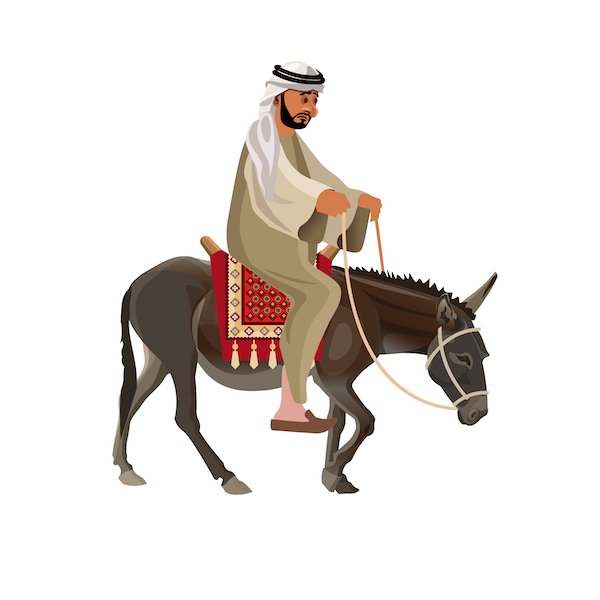
While the prophet journeys to meet the Moabite king, God sends an angel to kill him. The prophet can’t see the angel. However, his donkey can. The donkey shies away from the angel with the flaming sword three times and is rewarded for her trouble with beatings carried out by a frustrated prophet who just wants to get on his way and earn a little bit of extra cash.
Finally, God opens the donkey’s mouth and miraculously gives her the ability to speak human language. After she rebukes her master, God unveils Balaam’s eyes, he sees the angel, relents, and goes onward to Moab, agreeing to only say what God tells him to. And of course, Balaam, who has been hired to curse the Israelites, can do nothing but bless them. [1]
On the surface, we might think this is a story about God saving the Israelites from being cursed by the Moabites.
But does this really make sense?
After all, Balaam’s curses and blessings didn’t really matter in the grand scheme of things. God wasn’t bound by them. He didn’t have to honour something that was against His will, uttered by a disobedient prophet.
So, what’s really going on in this story?
It must be something really important. After all, God sent an angel to block Balaam’s way. He opened the mouth of a donkey to talk. He spoke directly to Balaam at points.
What if this story is less about God saving the Israelites, and more about God saving Balaam?
If Balaam had prophesied against Israel, he would not have been speaking the words of God. He would have been using the name of God to broadcast something false. This is insulting to God and (when the prophecy doesn’t come true) potentially damaging to His reputation, since Balaam was known as a prophet of God.
Let’s look to a few key verses in the Old Testament to help us understand the seriousness of this sin.
In the time of Jeremiah, God said, “An appalling and horrible thing has happened in the land: the prophets prophesy falsely, and the priests rule at their direction.” God views false prophecy as appalling and horrible.
Deuteronomy 13 equates false prophecy with inciting rebellion against God [3], and the book of Ezekiel records God as saying, “My hand will be against the prophets who see false visions and utter lying divinations.” [4] The penalty for false prophecy was severe. [5]
Let’s return to the story of Balaam. Here was a known prophet of God, willing to sell his prophecies for money [6]. Essentially, he’s proclaiming that Almighty God’s favour and displeasure are for sale. He’s proclaiming that sinful humans can somehow dictate God’s blessing and curses if they have the money to do so. There is no justice, no right and wrong. Coins are mightier than God.
He’s bringing himself perilously close to God’s judgement.
So God steps into the situation. Balaam’s prophecies will not influence His treatment of the Israelites one bit.
But they will influence Balaam’s future relationship with God. So far, he’s been known as a prophet of God. Will he continue to be known as one? Will he become a false prophet? Will he open the door to his own destruction and invite it in for dinner?
The ball is in Balaam’s court. But before the prophet chooses the way he will go, God sends him an angel. He opens the mouth of a donkey in rebuke.
Balaam doesn’t marvel that his donkey is talking. He threatens her.
In the end, Balaam obeys God in deed but not in heart. He goes to the king of Moab and self-righteously declares that he cannot say anything that God has not told him to say.
But in his very next breath, he advises the king of Moab to incite the Israelites to sin. He knows that God will not bless a people who are actively rebelling against Him.
It works. The Israelites take the bait and sin, and God punishes them.
And so, Balaam successfully does bring a curse upon the Israelites.
But the prophet doesn’t take his own advice. He doesn’t see that the very rebellion that invited God’s judgement upon the Israelites also resides in his own heart. In the end, he will be destroyed with Israel’s enemies. He continues to associate with the Midianites and is killed along with them in an Israelite raid.
God did not wish this end for Balaam. He went to great lengths to save him from becoming a false prophet. Saving just one of the people He loves is that important to God. He’s willing to go even father still.
But if we are unwilling to admit the truth and repent, then He will not force us to obey. He will not turn us into automatons. We are free to make our own choices, even if they sometimes lead us away from God and into destruction.
Which path will we choose?
Lord God, please humble my heart today and enable me to examine my own life. Please show me where my words don’t match my deeds. Please give me the courage to repent and turn to You. Please open up my heart and mind so that I can see alternative ways to the sinful ones I usually choose, and so that I can embrace Your truth and light and discard my own darkness. Thank You, Jesus, for the cross. Thank You for going to even greater lengths for me than You did for Balaam. I love You, and I want to honour You today. In Jesus’ name, amen.
NOTES
[1] This story can be found in Numbers 22-24.
[2] Jeremiah 5:30, NIV.
[3] See Deuteronomy 13:5.
[4] Ezekiel 13:9, NIV.
[5] Again, see Deuteronomy 13:5.
[6] Incidentally, God condemns prophesying for money in Micah 3:11.