
We’ve been taking a brief look at how East Asians understand salvation, and how this changes our ideas of what it means to share the good news of Jesus within the context of East Asia. Last time, we talked about the role of unity, community, and reconciliation in East Asians’ understanding of the salvation message. Today, let’s continue the conversation along a few additional dimensions.

Paradox
The symbol of the yin and yang is helpful if we’re trying to understand how East Asians approach paradox. For them, harmony involves holding ‘on to two polar opposites without dismissing one in favour of the other. If there were no difference or polar opposites, then harmony would mean nothing.’ [1] Although Western thinkers attempt to hold opposing sides of a paradox in tension without dismissing one or the other, East Asians cradle them in harmony. Eventually, the two sides of the paradox may swirl together to create new insights—and we may begin to perceive something entirely new born out of polar opposites.
This is how Kazoh Kitamori, a Christian Japanese thinker, came to grasp a new reality: ‘divine love rooted in divine pain.’ [2] The pain of God, Kitamori said, occurs when Christ embraces people who defiantly cling to their sin. [3] God stubbornly refuses to give up His love for sinners even when they’re rebellious, and this is the thing that causes Him relational pain. [4]
Other thinkers from the West have suggested that God’s pain is caused by His compassion over suffering [5]—and the Western and Eastern approaches complement one another. Compassion and anger are not separated in the heart of God. As one pastor writes, ‘The two rise and fall together. A compassion-less Christ could never have gotten angry at the injustices all around him. Compassion and indignation rise together in his soul.’ [6]
Kitamori said, ‘God in pain is the God who embraces those who should not be embraced and reconciles the world to Himself.’ [7] God embraces the perpetrators—abusers, and paedophiles. The harm these violators cause to the innocent brings out in us a shadow of the anger God must experience at human sin. The cross joins together God’s love and anger [8]—He suffers not only with the victims, but at the damage the wrongdoers inflict on themselves. He suffers at one person He loves wilfully causing hurt to someone else He loves. Yet He makes the decision to keep loving both the abused and the abuser.
From the point of view of mission, the pain of God gives Christians emotional courage to embrace not only victims, but perpetrators. Christians can participate in God’s work, not putting aside the anger that naturally flows from horrific sin, but entering into the fellowship of His sufferings, 'embracing those who should not be embraced', and loving like Jesus.
Apprenticeship
Since Christians in Asia have been persecuted more than on any other continent, [9] they must develop faiths strong enough to withstand great suffering. Apprenticeship models are used in a variety of contexts within East Asia. In Japan, pupils may remain at a ‘talent’ (i.e., apprentice) level for decades; [10] they don't become masters until the previous master has passed away. Attaining excellence requires lifelong commitment. In East Asia, apprenticeship tools such as narrative and hands-on experience are often used in discipleship.
Narrative
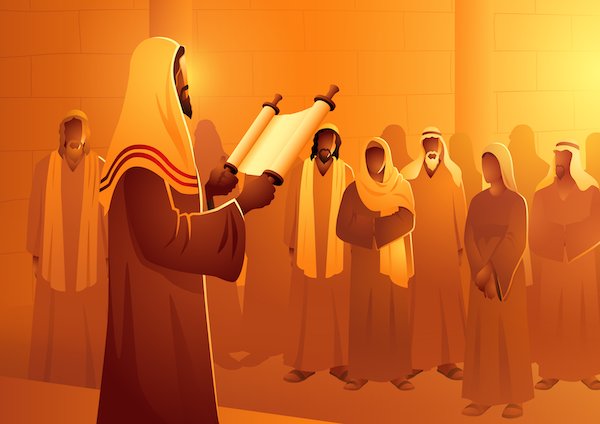
C.S. Song, a Taiwanese academic, wrote, ‘Story is the matrix of theology.’ [11] In other words, theory without story has no bones; it cannot move, and it certainly cannot stand. In Asia, people understand God through stories: [12] both laypeople and spiritual academics often prefer concrete stories over abstract theories. This is apparent in the fictional writings of people like Shusaku Endo (Silence, A Life of Jesus) and Ayako Miura (Shiokari Pass, Freezing Point, The Wind is Howling). Even academic books trace biographies to illustrate their various theoretical points. Although both Eastern and Western Christians use personal testimonies in witnessing, East Asians also use fictional stories as robust methods of evangelism and discipleship. Fictions have an advantage over personal stories: they invite readers and hearers to participate through imagining themselves as part of the story, rather than remaining as passive observers of historical events.
Practical Experience
Western academics sometimes call Eastern spirituality ‘applications rather than interpretations’. [13] This is because application, rather than abstraction, is more valued in these cultures. Asian ideas of God don't so much exist in the mind as in the hands. They demand action in order to be considered genuine. (This is similar to the Buddhist path to enlightenment, which includes correct intentions, words, and actions. [14])
The Taiwanese Bunun tribe prioritizes the actual over the abstract in their worship services. [15] A ‘good sermon’ is one they can apply directly to their lives. When pastors from outside their culture preach in abstract terms, the Bunun believe the pastor is elevating himself and putting them down; they say the ‘pastor’s heart is not here, not really in our church.’ Practical experience is built into the Bunun culture. Within a year of Christianity’s arrival at one of their villages, eight Bunun men had become Christians, been appointed as missionaries, trained, and sent to surrounding villages. They truly owned their faith, and soon built their own sustainable churches.
This isn’t always the case. In some places in Asia, missionaries have prevented attempts by the people to adapt Christian practice for their own cultures, claiming that decades-old churches are still too immature to do this. This is a systematic problem, and we should take heed. If cross-cultural workers clutch onto authority, this only stunts the growth of young churches and prevents them from fully embracing and understanding their salvation. [16]
East Asia has so much to contribute to our understanding of what it means to be a Christian—from inter-connected relationships and community conversions, to treating unity as a goal, not just a value. East Asian mentalities can give us emotional courage to reach out to people we might otherwise avoid. And, our methods of discipleship can be much more robust—especially if we use tools like narrative, poetry, and practical experience to deepen new Christians and provide them with a lasting faith.
NOTES
[1] Chia, Edmund Kee-Fook. 2021. ‘Asian Theological Methodologies’, in Asian Christianity and Theology: Inculturation, Interreligious Dialogue, Integral Liberation (Routledge) <https://www.perlego.com/book/2568131> [accessed 11 November 2025]: 60.
[2] Chua, How Chuang. 2021. Japanese Perspectives on the Death of Christ: A Study in Contextualized Christology (Regnum Books). Kobo: 381–382 of 1252 in e-book.
[3] Ibid.: 352 of 1252 in e-book.
[4] Ibid.: 404–405 of 1252 in e-book.
[5] Ibid.: 500, 503–504.
[6] Ortlund, Dane. 2020. Gentle and Lowly: The Heart of Christ for Sinners and Sufferers (Crossway). Kobo: 88-89 of 205 in e-book.
[7] Kitamori, Kazoh. 2005. Theology of the Pain of God (Wipf & Stock Publishers): 12.
[8] Chua 2021: 419 of 1252 in e-book.
[9] Sunquist, Scott W. 2014. ‘Asia’, in Global Evangelicalism: Theology, History, and Culture in Regional Perspective, ed. by Donald Lewis, and Richard Pierard (IVP Academic) <https://www.perlego.com/book/3009355> [accessed 1 December 2025]: Persecution, Martyrdom and Political Influence.
[10] Ying, Kuang. 2018. ‘On Essence of Apprenticeship and Its Enlightenment to China’, in China’s Education Reform: Current Issues and New Horizons, ed. by Ruiquan Gao, and Guanjun Wu (World Scientific Publishing) <https://www.perlego.com/book/ 845276> [accessed 11 December 2025]: Behind the Phenomenon: Essence of the Apprenticeship.
[11] Song, C. S. 2011. In the Beginning Were Stories, Not Texts: Story Theology (Wipf & Stock Publishers): 18.
[12] Chia 2021: 55.
[13] Vaughn, Brad. 2019. Reading Romans with Eastern Eyes: Honor and Shame in Paul’s Message and Mission (IVP Academic) <https://www.perlego.com/book/1031880> [accessed 3 December 2025]: 7.
[14] Lopez, Daniel S. 2025. ‘Eightfold Path’, Britannica <https://www.britannica.com/topic/ Eightfold-Path> [accessed 9 December 2025]: Eightfold Path.
[15] Details about the Bunun are taken from Yang, Shu-Yuan. 2008. ‘Christianity, Identity, and the Construction of a Moral Community Among the Bunun of Taiwan’, Social Analysis, 52.3, pp. 51-74, doi:10.3167/sa.2008.520303: 54-66.
[16] See Philippians 2:12.

 We don't get brownie points for sacrificing more than God asks of us. So it's important that we take the time to understand what it is that God requires of us as workers in His kingdom, regarding the families that He has entrusted us with.


