Japanese culture is so different from our own that we sometimes find it difficult to relax. It can be challenging to be always thinking about how people from a different cultural context might be interpreting our verbal and non-verbal communications. Sometimes we make mistakes (and are very blessed with the graciousness of our Japanese friends!); and sometimes we suspect we’ve made mistakes, and are uncertain about how to proceed. As you can imagine, we pray a lot for wisdom and guidance as we navigate this complex and wonderful culture!
This story starts with an instance where Peter suspected he had made a cultural mistake. Upon reflection after-the-fact, we thought that Peter’s action may have embarrassed or offended an older gentleman at our church who has always been very kind to us. We’ll call him Thomas.
We prayed, “Father, will this mistake damage our relationship with Thomas?”
“No,” came the answer.
Later, Peter had the idea to apologize to Thomas. When we prayed about it, we got a sense of God’s affirmation in this plan.
The following Sunday, Peter approached Thomas with the help of a friend who speaks English as well as Japanese (to make sure there was no linguistic, in addition to cultural, misunderstanding). He apologized profusely for the error. As they talked, it turned out that Thomas had forgotten the incident, and that he hadn’t actually been embarrassed or offended.
The result of this conversation ended up being far different than we had anticipated, and the primary message communicated was, “I continue to think about you after we see each other, and I care about you and your feelings.”
At this point in the story, I need to explain one other detail about Japanese culture. In Japan there is an emotion that we do not experience in North America. It stems from the mutual dependance of the culture, which we have discussed in other newsletters and posts. The Japanese highly value relationship and dependence on each other. In fact, mutual dependence is essential to the Japanese for building meaningful relationships.
When a Japanese person asks another Japanese person for a favour, the recipient of the request will feel a sense of happiness (“amae“) that the requestor has chosen to come to him/her with the request. To the person receiving the request, this is a sign of honour in the relationship. The requestor is giving the requestee a chance to deepen the relationship by establishing another layer of interdependence between them. The requestor has not chosen someone else.
At the end of Peter and Thomas’ conversation, Thomas told Peter that he is a volunteer crossing guard and asked Peter if he would like to join and help him out in this. Peter agreed, and is now a volunteer community crossing guard on Monday, Wednesday, and Friday mornings!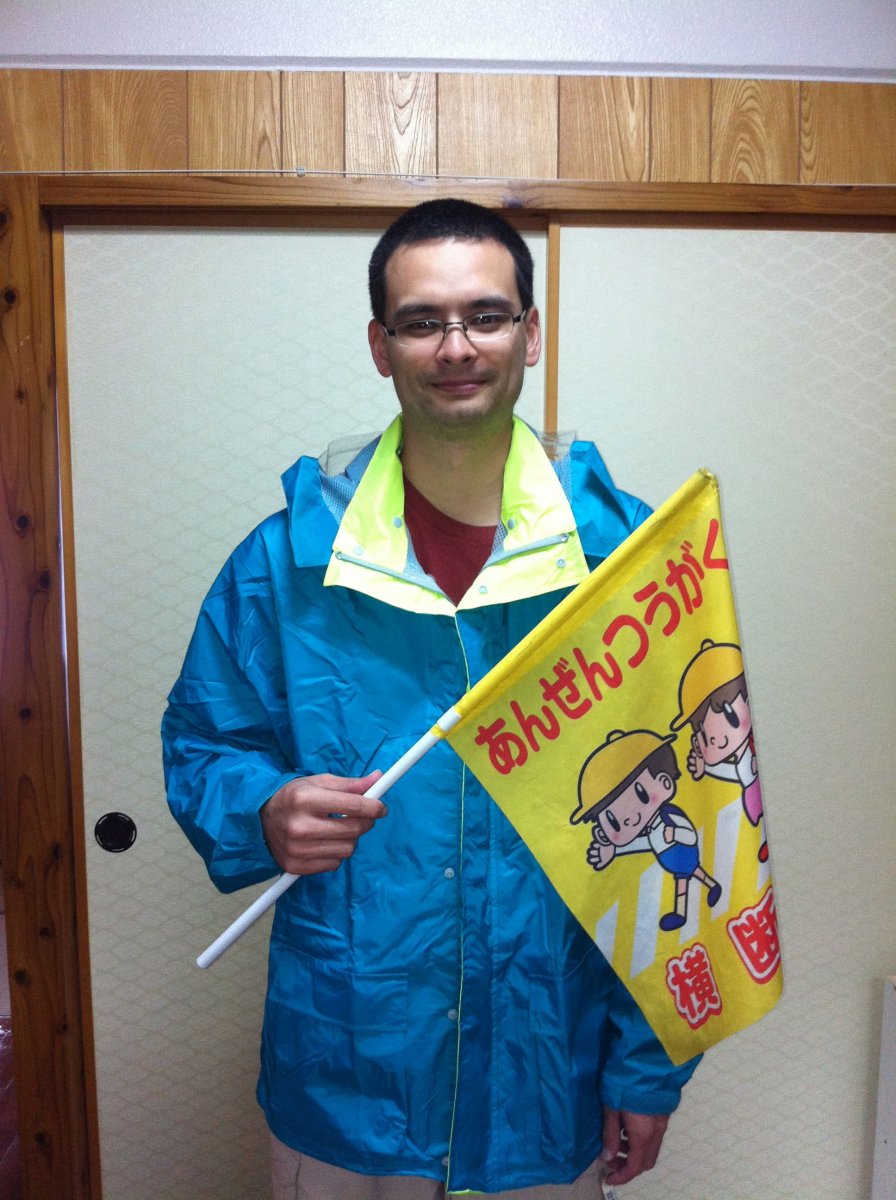
Here is a picture of Peter in his rain gear, with his special crossing guard flag. It reads, “safe school commute crossing”. We think this will be a great way to meet more people in the community. Needless to say, Peter is very much enjoying his first experience of amae!