

In Japan, if you're not employed by a Japanese company, tax reporting is done on the honour system. There doesn’t appear to be much governmental checking on whether people living here are declaring their full income—at least, we've never directly experienced any. This, of course, means that the system can be abused. In fact, there are now loads of articles in Japanese newspapers and on social media that talk about foreigners abusing the system and not pulling their weight.
We’ve always been proponents of “giving unto Caesar what is Caesar’s”. [1] Of course, if there’s a tax treaty between Canada and Japan, we use it to responsibly decrease our national taxes, but even with such tax relief, we do still often pay a higher percentage overall, compared to our Japanese friends. [2]
The other day, though, we experienced a beautiful benefit of paying our taxes.
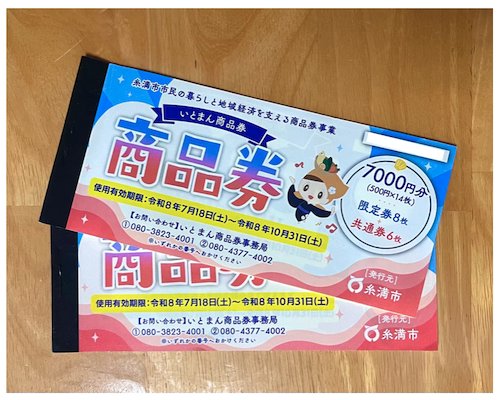
Over the past six years, our city office has issued coupons several times to try and stimulate spending within our community. They usually come in packs of 10-14 sheets, each sheet the rough equivalent of $5, and colour-coded.
Blue coupons can only be used at certain places you might associate with discretionary income (i.e., cafes, restaurants, beauty salons, etc.); red ones can be used at any of the “blue” places, but they can also be used at the grocery store, for gas, and so on.
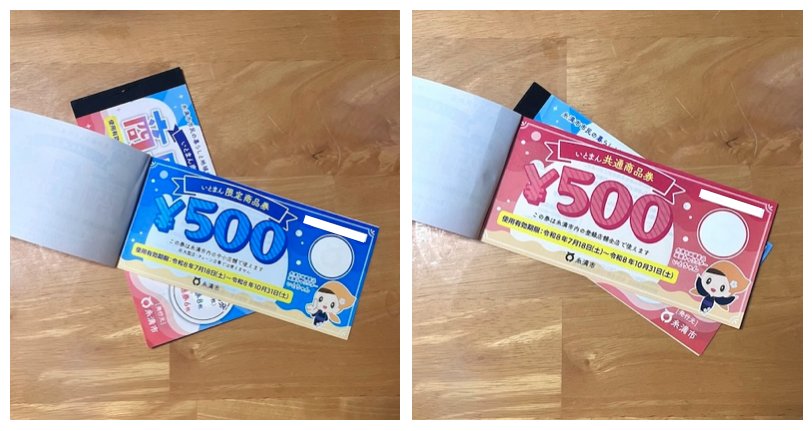
It’s a great system: we’ve discovered new restaurants with our blue coupons—places that we wouldn’t have tried without them, but that we definitely want to visit again. An ingenious way of stimulating the local economy.
Recently, the city office has changed the way it disburses these coupons. No longer are they simply placed in residents’ mailboxes. Now, they're delivered to the addresses of taxpayers only, with a signature required at delivery.
This means using the coupon books is now a declaration that we pay our taxes.

This has some interesting repercussions on relationships here. When I pulled out our coupon book to pay for groceries the other day, the lady at the cash reacted strongly. This is a lady I’ve been acquainted with for more than 10 years. She’s always been polite before. She’s smiled before. But now? Her grin was an off-the-charts, ridiculously huge beautiful beam. The relational warmth between us increased tenfold.
And with that, I realized: paying taxes, too, can be a testimony. We’re here to build relationships so that we can share the good news of Jesus. Paying taxes can be a declaration that we care about Japanese people, about Japanese society; that we want to be active participants and contributors; and that the Japanese themselves are more important than money.
I’m looking forward to the next time I chat with the grocery store lady. Maybe she’ll even be open to accepting my next invitation to cooking club…
NOTES
[1] See Mark 12:17.
[2] That’s because city and prefectural taxes (which carry the highest tax rates) tax the taxes we pay in Canada as if they’re net income, rather than subtracting a portion of the taxes we pay in Canada from our tax obligation in Japan, the way the national taxes do. When we return to Canada, we’ve learnt to leave our prefectural and city tax payments with our accountant rather than trusted friends; when our friends see our tax bills, they become distressed on our behalf.
(Picture source for first picture)


